

A marketing campaign is a series of organized, strategized efforts used to achieve a marketing goal.
Planning a campaign helps you improve performance and better control the outcomes of your marketing efforts. That’s why it’s worth knowing these eight types of marketing campaigns used successfully by big and small brands alike:
Product marketing campaigns are used by companies to introduce a product (or a product feature, services ) into the market.
They are one of the most important and complex campaigns in the life cycle of a product/service. This is because a newly introduced product (or service) needs effective marketing communication to impact sales. It also requires cooperation between different departments to make sure every part of the user experience is covered.
But besides the typical process of bringing a product to the market, there are also agile methods often used by startups, such as a minimum viable product (MVP).
Example
Product launch campaigns tend to be costly and bloated with all kinds of tactics and channels that big money can buy. But that doesn’t mean you have to dedicate $200M to a product launch of Windows 95 proportions.
While the marketing communication aspect is important when launching a product, what matters most is how well your product fits the market. To achieve product-market fit, you don’t need to operate on a colossal budget or have max. years of experience in the field.
Sales promotion campaigns are short-term initiatives used to stimulate demand for a product or service.
Most often, the goal of a sales promotion campaign is to increase sales. Think flash sales, limited-time offers, coupons, etc. The idea is to decrease the friction of making a purchase (price, shipping costs, etc.) and speed up the decision process by creating a sense of urgency.
As temporary discounts often bring fast results, it may be tempting for marketers to use these campaigns on many occasions. This is especially when the company doesn’t meet its sales quota. Yet running these campaigns too often has its downsides. Namely, discounts can devalue a brand and make it harder to sell products/services at regular prices in the future.
An alternative to offering discounts is increasing the value of a product. For example, you can add more products to make a bundle, offer some freebies, or provide free shipping.
Sidenote: These types of regular sales promotions (including Black Friday and Cyber Monday) can block sales for months, as many people will simply wait for the event to come.
Brand awareness campaigns highlight the brand and what it stands for to improve its recognizability among the target audience.
Essentially, brand awareness campaigns are more subtle, often indirect ways that impact sales. So instead of offering discounts, marketers will remind their audience that their brand is climate-neutral, designed for people who aren’t afraid to “think different” etc.
Price is not the only factor that motivates consumer behavior. Sometimes, we buy things because they make us feel good. Or maybe it’s because a company shares our values. Or perhaps the product makes us feel like we joined an elite club. Other times, it’s an emotion we just can’t explain.
Brands are these emotional and cognitive triggers that are used to evoke those various purchase factors. And the more consumers are aware of a given brand, the more likely they are to recall it when shopping.
Another thing about building brand awareness is it works best when it’s a systematic effort. The cost of “forgetting” a brand can be high. But there are ways to save a brand from oblivion even when the timing isn’t ideal for consumers to make a purchase.
Example
Nobody promotes cold drinks in the cold season better than Coca-Cola. The Coca-Cola Santa, the truck, the polar bears—these are the brand codes consumers have been exposed to for decades.
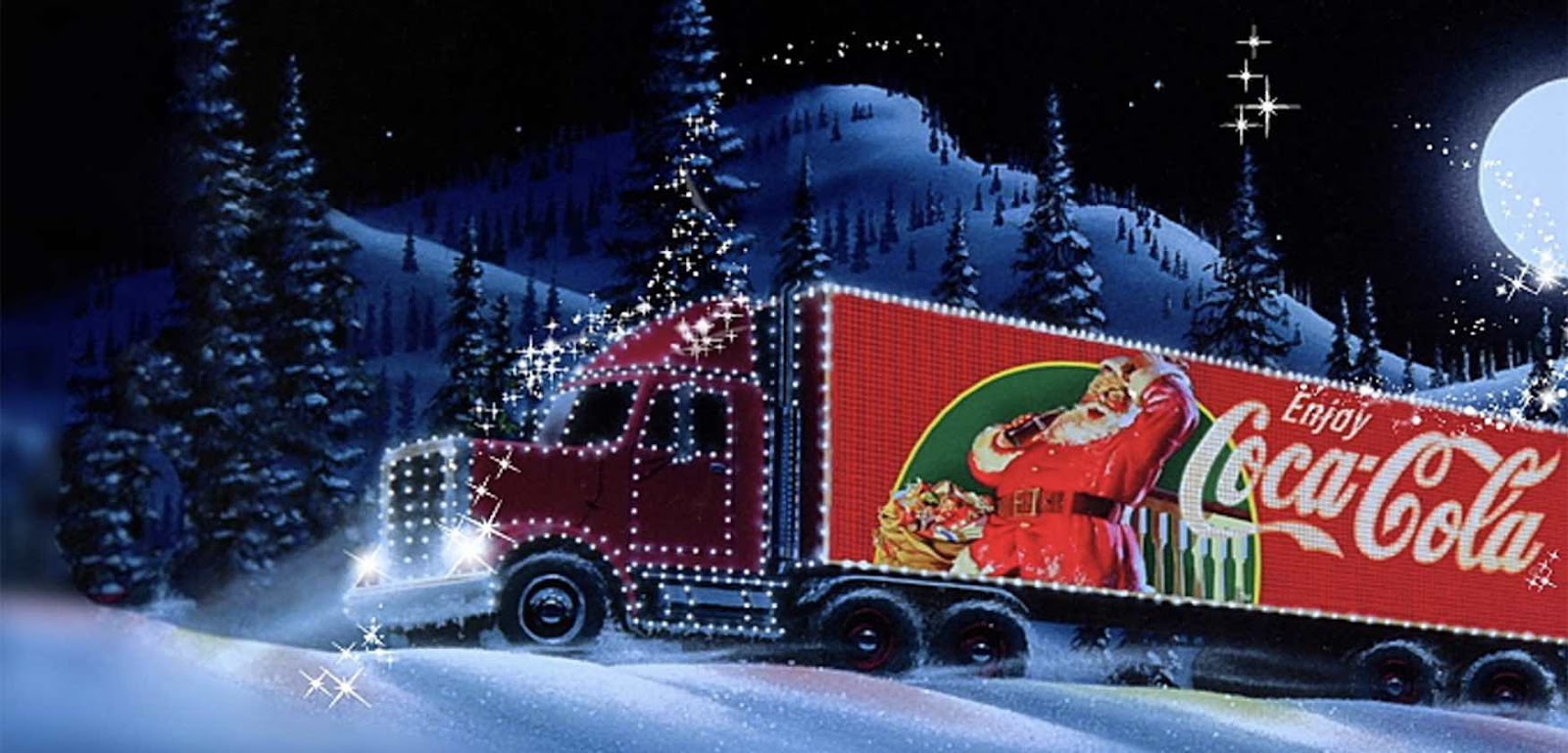
There is even a dedicated page on the brand’s website that answers the question: “Did Coca-Cola create Santa Claus?” Amazingly enough, this page gets an estimated 900 monthly organic visits in the U.S. alone.
During those multimillion-dollar campaigns, Coca-Cola doesn’t do hard selling. Instead, it tries to find its way to our tables by introducing its brand.
And those typically are the joy, warmth, and safety of a community. These emotions are important parts of Coca-Cola’s brand positioning.
4. SEO Campaign:
SEO campaigns are a course of coordinated actions to improve the search engine ranking of a website.
By improving the search engine ranking, your website can get to the first page of the search engine results page (SERP) and take advantage of the organic traffic potential (and that’s over 99% of searchers’ clicks, according to this study).
To illustrate, ranking number #1 for the keyword “backlink checker” and related keywords (like “check backlinks” or “free backlinks checker”) can drive an estimated 14K visits monthly from organic search alone.
Because search engines like Google use many ranking factors, SEO campaigns can target one or multiple factors to achieve their goal.
Here are some of the known ranking factors:
- Backlinks
- Search intent
- Topical authority
- Page speed
Email marketing campaigns are simply marketing campaigns that are disseminated through the email channel.
This type of campaign is often used for the following:
- User onboarding
- Generating traffic
- Lead nurturing
- Sales promotion
- Newsletters
- Cart abandonment (example shown below)
The great thing about email marketing is it uses an owned marketing channel to communicate with a “qualified” audience (i.e., people who know your brand and gave permission for direct communication).
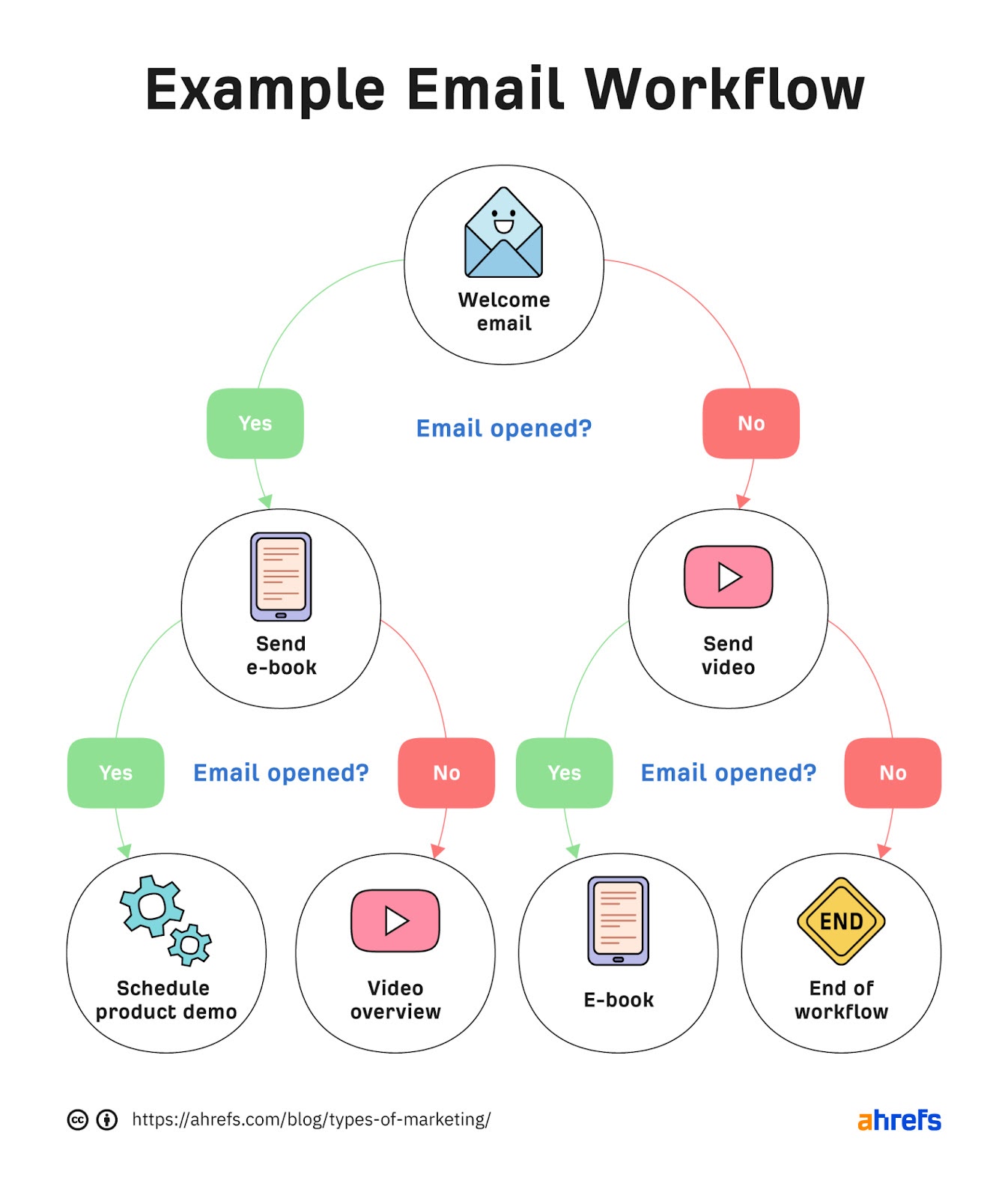
Another great thing about email marketing is you can fully automate it by creating workflows that are automatically engaged (or stopped) based on specified triggers. For example, clicking a link in the email or putting together a list of clients who abandoned their carts. So an email workflow can look something like this:
Just like with email campaigns, what sets social media campaigns apart from other types is that they employ social media platforms to reach the target audience.
Also like email marketing, social media allows you to interact directly with an audience who follows your brand. But unlike email, messages on social media can spread quickly beyond your followers to reach a huge audience organically. (Note: Organic reach has been decreasing over the years, especially on Facebook and Instagram.)
What’s more, you can (and often should) amplify your message with paid advertising on social media. To do that, you can take advantage of targeting based on many factors, such as location, age, or interest.
Social media offers many possibilities, making it a great fit for different kinds of goals, including:
- Generating traffic.
- Building a community.
- Building brand awareness.
- Generating revenue.
- Encouraging user-generated content.
6. Public relations (PR) campaign
Public relations (PR) campaigns are used to positively influence the way a brand is perceived by managing communications with the media and the general public.
Whether PR can be deemed as part of marketing is debatable. But what is certain is that PR campaigns, just like marketing campaigns, can affect the demand for a product and, hence, significantly impact sales.
What is unique about PR, though, is it uses a different type of communication compared to marketing. For instance, while marketing campaigns are notorious for generating demand directly via discounts and all sorts of “special deals,” PR campaigns are never about that.
Instead, a PR campaign will generate demand by sending out press releases about how a product is valuable to its target users (e.g., product introduces a new kind of technology while still being affordable).
PR campaigns are especially effective for:
- Promoting an idea important to the brand.
- Building brand image.
- Increasing brand credibility and status.
- Providing added value.
- Inspiring word of mouth.
- Getting attention from the media (and taking advantage of their reach).
The campaign is a creative and humorous approach to the problem of railroad accidents. It makes you think about creativity in a way that is.
The so-called 360 marketing campaigns are about promoting a product or service using a cohesive message through multiple marketing channels.
To compare, while social media and email campaigns use one channel, 360 marketing campaigns use both of these channels and more to get the message across. Furthermore, some other types of campaigns, such as the product marketing campaigns discussed earlier, can become 360 campaigns as long as they use multiple channels and have a unified message.
Multiple channels and a cohesive message. These may sound quite trivial. But campaigns designed this way have two advantages over their single-channel alternatives:
- More marketing channels mean more people reached during the campaign and more convenience for your potential clients to contact you.
- One cohesive message repeated multiple times is easier to understand, remember, and act upon.
These two advantages make 360 campaigns ideal candidates for rebranding, introducing a new product, or simply maximizing the reach and impact of your message.
Final thoughts
I hope the marketing campaign discussed in this article will give you an idea of which type of marketing campaign you should use next.
Above all, think about the goal you want to achieve with your campaign, as no marketing campaign is a panacea on its own. For instance, if you want to give your sales a quick boost, a sales promotion campaign will offer better results in a shorter time than, let’s say, a brand awareness campaign.
If you’re confused about what goals to prioritize, start with a marketing strategy. And if you need more inspiration, hone in on choosing the right marketing goals.
Got questions? Ping me on LinkedIn.


