

Long-form keywords isn’t necessarily better for SEO than short-form keywords. As with many things in SEO, it depends.
Sometimes, long-form keywords is overkill and a waste of resources. Other times, it’s necessary to stand the best chance of ranking.
In this guide, you’ll learn a simple way to figure out “Short-Form vs. Long-Form Keywords: Which Is Better for SEO?”
But first, let’s get our definitions straight:
Short-form keywords is roughly anything under 10 words. This is how we choose to define it, but definitions vary. You may only consider something under 5 words to be short-form content, and that’s fine.
Long-form keywords is roughly anything over 10 words. Again, this is how we choose to define it. You may disagree and only see something as long-form keywords if it’s over 50 words. It’s up to you.
If you’re asking this question in the context of SEO, then what you’re probably asking is, “Do I need to write thousands of words to rank for this keyword? Or can I write something shorter?”
Fair question. But you shouldn’t decide this by setting an arbitrary word count.
Instead, ask yourself, “How much do I need to write to satisfy searchers?”
Here’s a straightforward way to answer that question in five steps:
1. Look at what’s ranking
Pull up the search results for your target keyword. You can do this in a couple of ways “Using Some SEO Search Tools”.
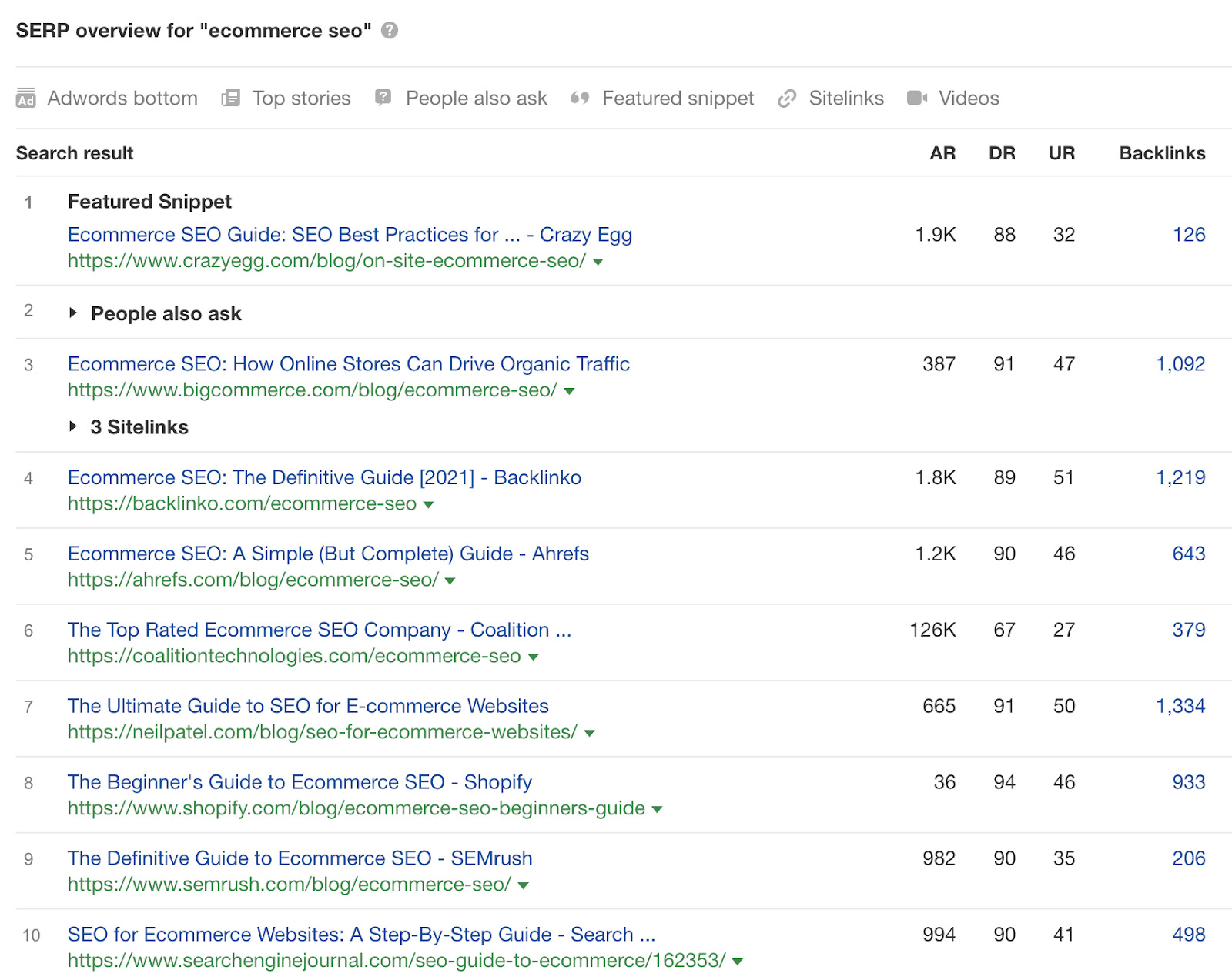
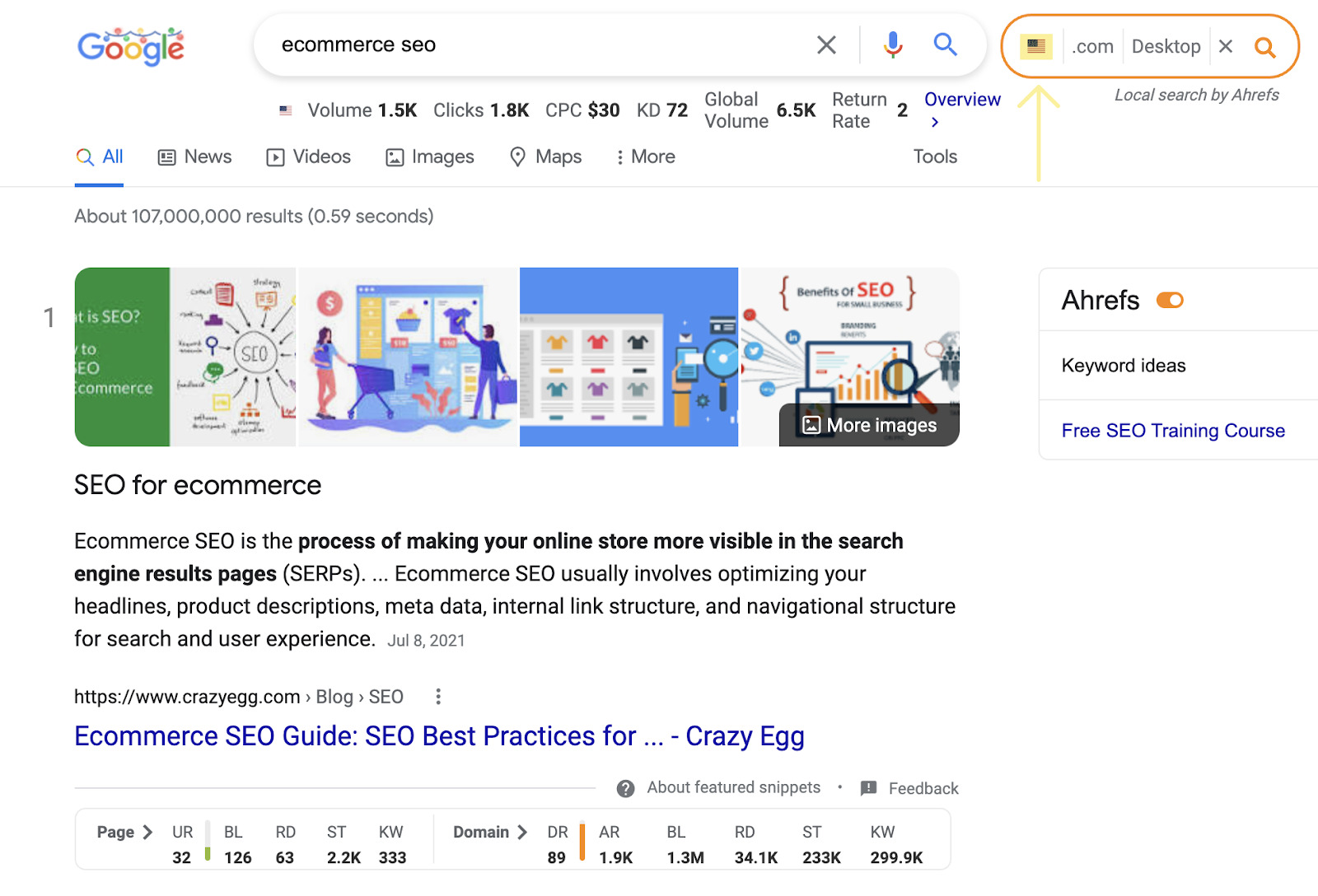
2. Pick a keyword format
Your content is unlikely to rank unless it aligns with what searchers want, regardless of how much you write. This is why it’s usually best to choose a content format that is already ranking.
Here are a few popular content formats to look out for:
- Guides
- Listicles
- How-to
- Tutorials
- Reviews
- Definitions
- “Vs.” posts
For example, if we look at the blog posts ranking for “ecommerce seo,” they’re pretty much all guides…
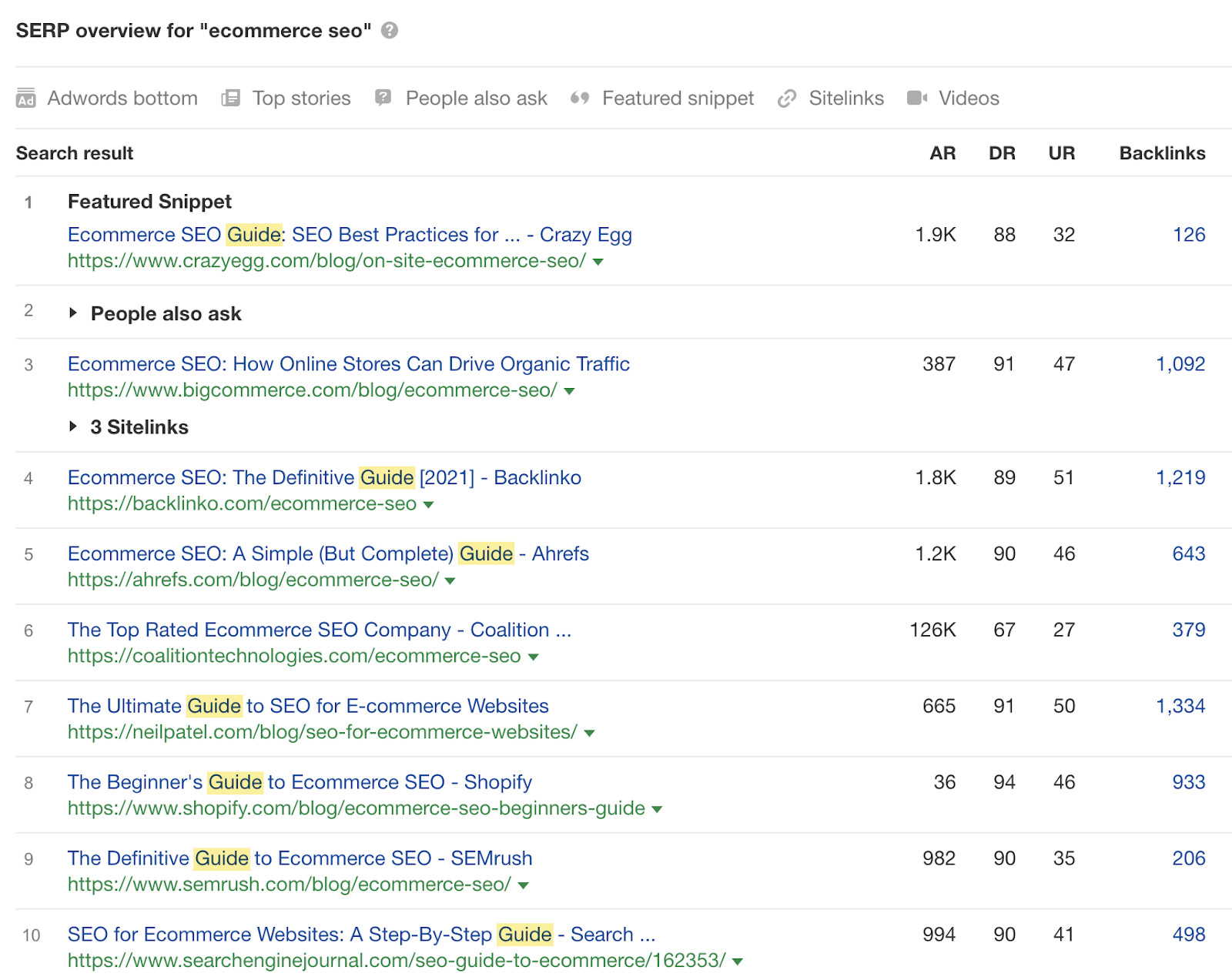
… so it’s clear that we should also write a guide.
If we look at the posts ranking for “keyword cannibalization,” we see a mix of definitions and how-tos:
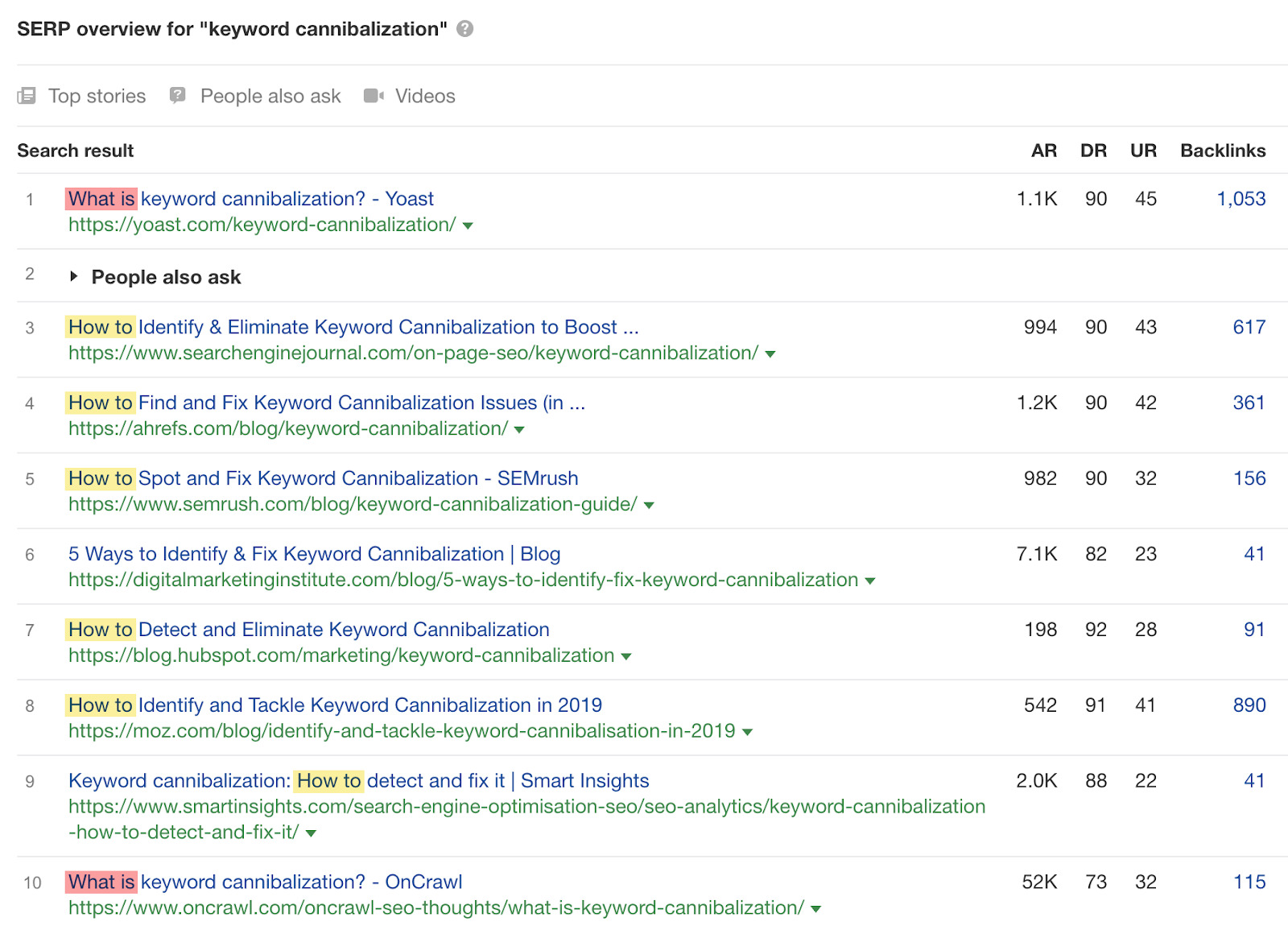
This is known as a mixed intent keyword.
With mixed intent keywords, it’s up to you which format to create. Just keep in mind that some content formats will give you a better opportunity to promote your business than others.
For example, since you’re able to find keyword cannibalization issues using our tool, it makes more sense to write a how-to than a definition post.
3. Create a search-focused outline
A search-focused outline is a barebones plan for your content that takes inspiration from similar top-ranking content keywords. The logic here is that similar top-ranking content is clearly satisfying searchers, so analyzing it can help you understand what they want.
The best starting point for a search-focused outline is a content gap analysis.
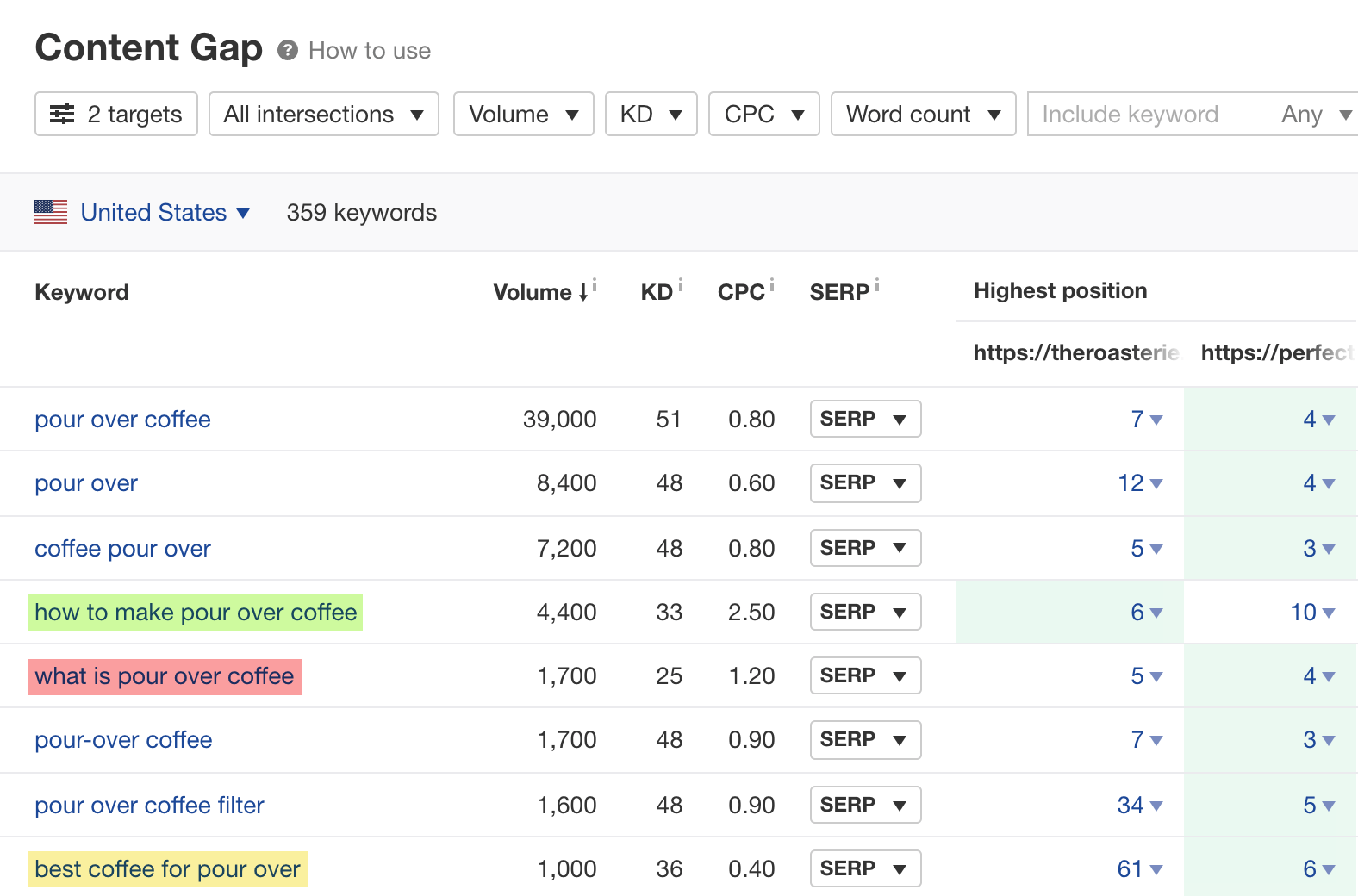
Let’s say we want to create a guide targeting the keyword “pour over coffee.”
If we take the top-ranking guides and plug their URLs into Content Gap tool, we see all the keywords that one or more of those pages rank for in the top 10. By eyeballing these keywords, we can start to pluck out subtopics that we can include in our outline:
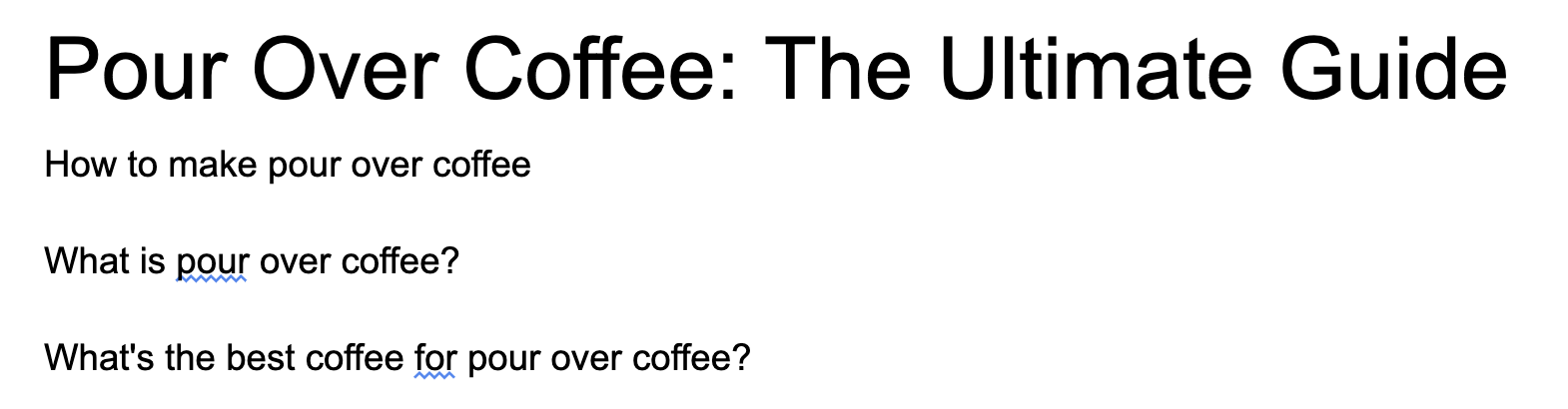
If you need more inspiration for your outline, visit the pages themselves and eyeball their subheadings. This will also help you better understand how to structure your content and may unveil subtopics you missed.
For example, if we open two top-ranking guides for “pour over coffee” and use SEO Toolbar to view the subheadings, we see they both talk about equipment:
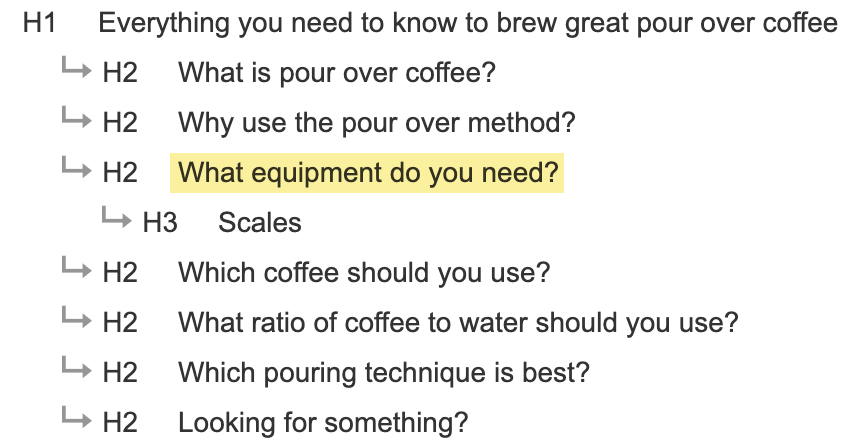
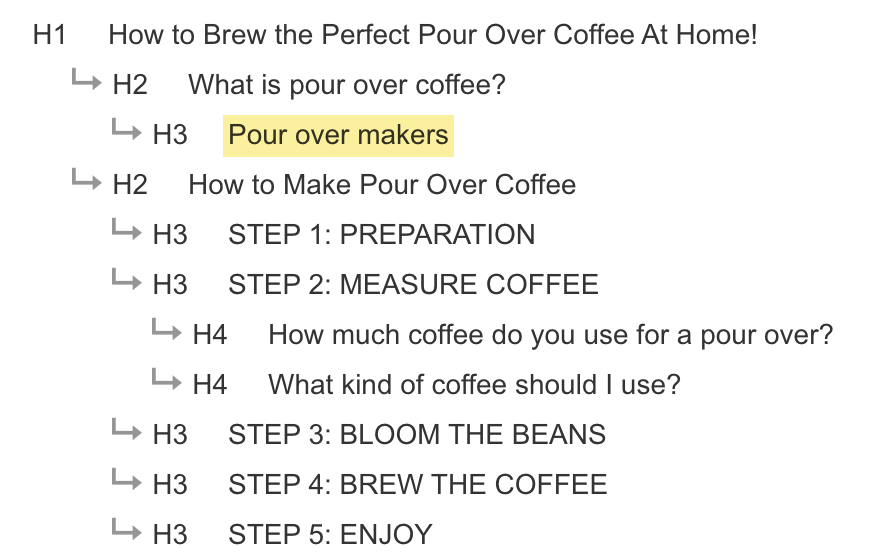
This is likely an important thing to include.
We can also see that both guides start with a definition. This makes total sense and is probably the best starting point for any guide to pour-over coffee.
Here’s what our final search-focused outline may look like for this topic:
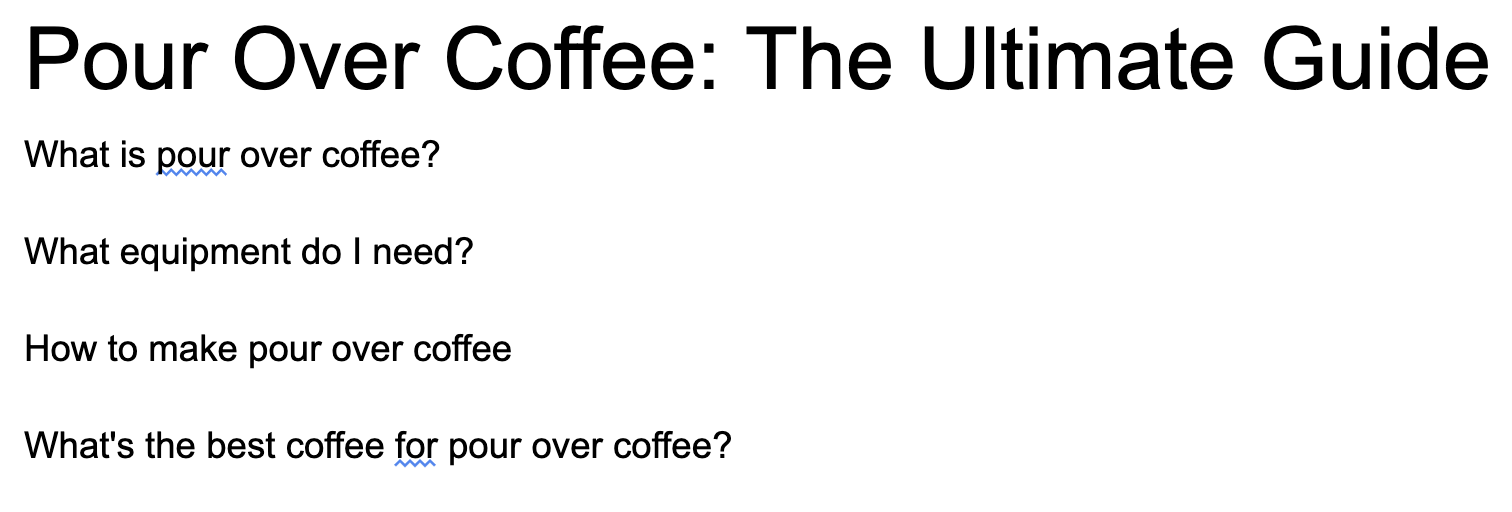
4. Start writing
It’s finally time to put pen to paper and transform your outline into “content.”
This is where you get to unleash your creativity and share your knowledge with the world. Just remember not to stray too far from your outline, as it’s there to ensure you cover what is needed to satisfy searchers.
Don’t worry about word count or length at this stage. Just focus on getting your thoughts down.
Here are a few useful tips if you’re struggling:
- Free write – This is where you write and don’t stop. No backspacing to correct spelling mistakes. No rewriting sentences. Just write. You’ll probably find that your content flows better if you can master this.
- Use the Pomodoro technique – This is where you write for 25 minutes before taking a five-minute break. Repeat this process as many times as necessary to get your content done.
- Use a distraction-free writing tool – Bear is one of the favorite, but there are a few similar apps.
Whichever app you use, I don’t recommend using one that shows the word count as you type. It’s too distracting and may cause you to slip into thinking, “Hey, this is getting long” or “Hey, this seems too short.”
This is the kind of thinking you want to avoid. You just want to write as much as you need and no more. Don’t even look at the word count.
5. Trim the fluff
Regardless of whether your content ends up being short-form or long-form, your first draft will always be way too long. It’ll have run-on sentences, points that nobody cares about, and overly long paragraphs.
That may seem bad, but it’s exactly what a first draft should look like. You’ll find it much easier to trim and refine your ideas once they’re down on paper than to obsess over them as you go.
Here’s how to do that in three steps:
The first step is self-editing. This is where you go through your first draft and cut any unnecessary fluff. You should also rewrite any meandering sentences and make sure things are as concise as possible. Tools like Hemingway and Grammarly can help with this.
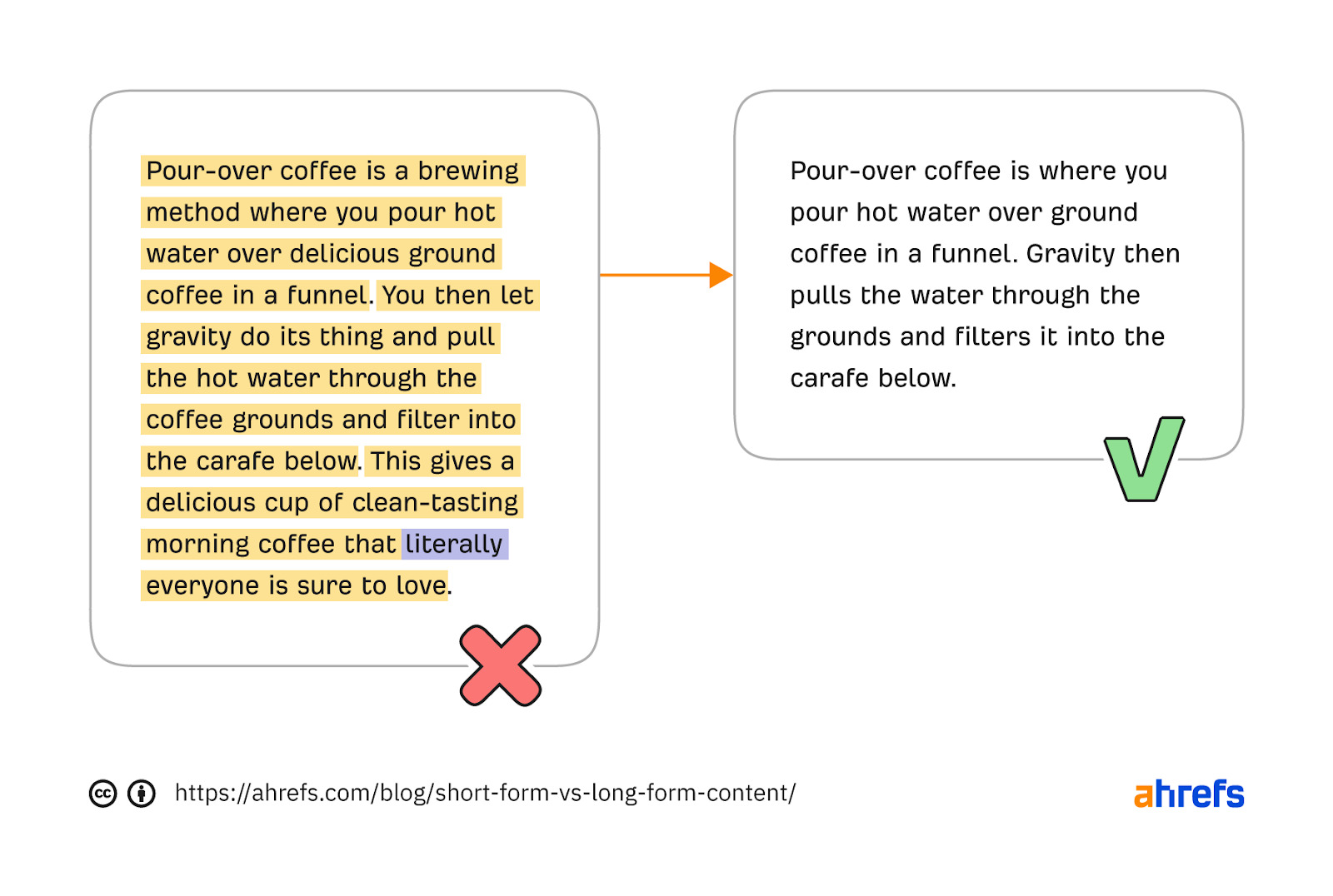
The second step is to get a friend or colleague to provide feedback. This can be a tricky one, as most people won’t want to hurt your feelings. I recommend explicitly asking them for feedback on things you can cut or shorten. This should make their feedback more focused and reduce their anxiety about offending you.
The third and final step is a round of self-edits based on your friend’s or colleague’s feedback.
Whatever your word count is now, that’s how long your content needs to be. Maybe it’s long-form; maybe it’s short-form. It doesn’t matter. What matters is you’ve written what is required to meet searchers’ expectations.
Final thoughts
Focus on satisfying searchers, not hitting some arbitrary word count.
If you’re working with freelancers and need to give them a ballpark figure because you’re paying by the word, let your search-focused outline guide you. If there’s not much ground to cover, tell them to keep it short and sweet. If there’s a lot to cover, give them a rough limit and have them tell you if the content needs to be longer. Giving a bit of flexibility is key here.
Got questions? Disagree? Ping me on LinkedIn.


